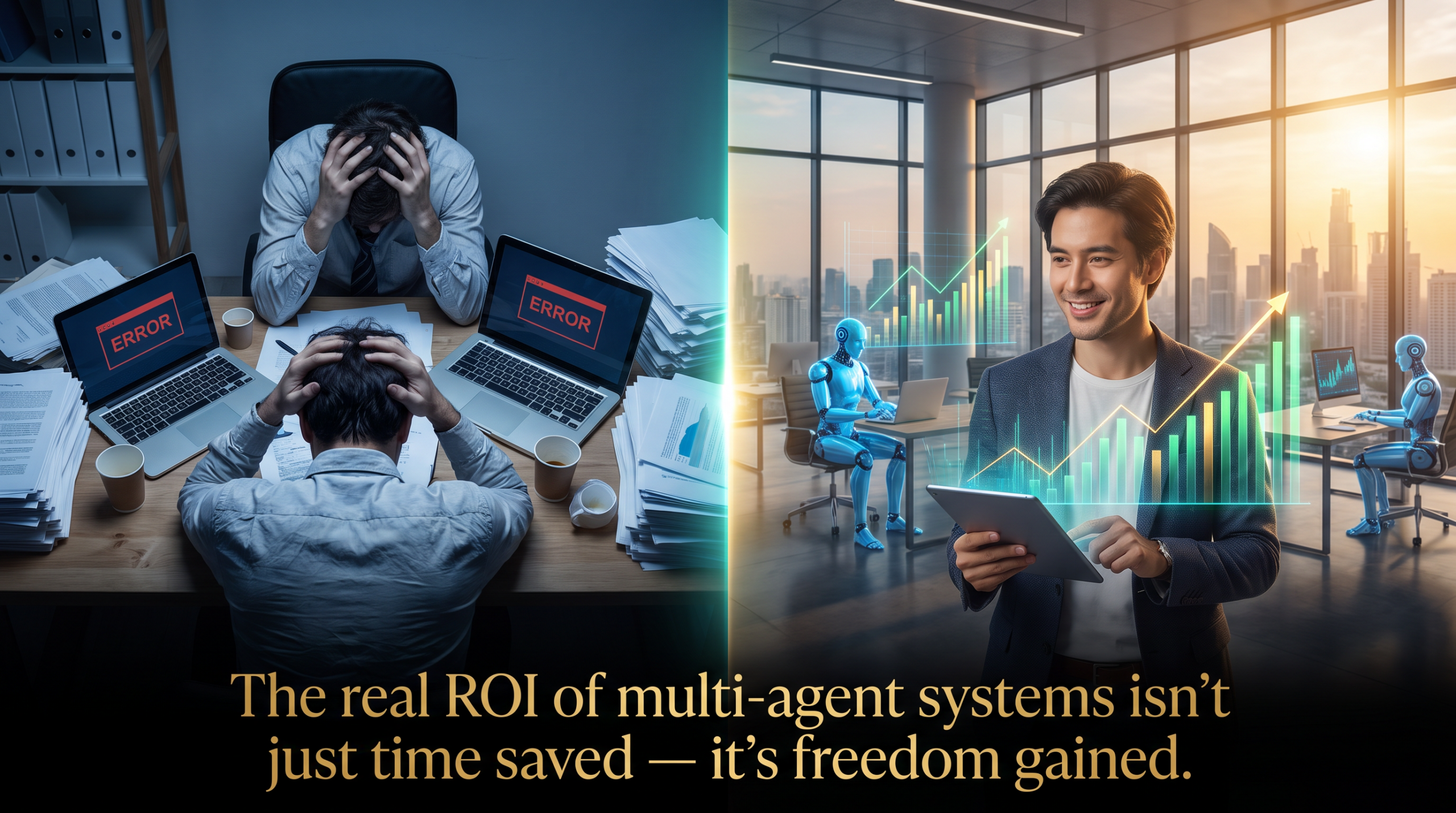
Best AI Automation Tools for Enterprise Scaling: CrewAI, LangChain & Agent Workflows
18Enterprise automation is moving beyond chatbots and toward coordinated AI workflows that can plan, execute, verify, and hand off work across teams and systems. In 2026, the strongest business value comes from using agent frameworks like LangChain and CrewAI to automate repeatable, multi-step processes while keeping human oversight where judgment, compliance, or brand risk matters.langchain+2.
This topic is about how enterprises can scale operations with AI agents that do more than answer questions. The real shift is from isolated assistants to multi-agent systems that split work into specialized roles such as planner, researcher, executor, and reviewer, which is why adoption is rising quickly in production environments. LangChain is strong for flexible orchestration, observability, and production tooling, while CrewAI is often positioned around role-based workflows and faster business adoption for teams that want clearer agent collaboration patterns.digitalapplied+4
The business case is compelling, but it is not automatic. Companies gain speed, throughput, and consistency in areas like customer support, sales operations, internal knowledge management, compliance review, and analytics, yet they also inherit new risks such as compounding errors, vendor dependence, governance overhead, and unstable outcomes if the workflow is poorly designed. The best results come when organizations start with one high-value workflow, measure the savings, and only then expand into broader multi-agent automation.ampcome+4
Market Context
The 2026 enterprise landscape shows that AI agents are no longer experimental in many organizations. One 2026 data summary reports that 80% of enterprise applications now embed at least one AI agent, and 31% of enterprises have at least one agent in production; it also notes that multi-agent orchestration has grown sharply as companies move from simple assistants to coordinated workflows. A separate 2026 mid-year report says enterprises are increasingly shifting from single-agent use cases to manager-plus-specialist setups, especially where work requires research, execution, and review steps.digitalapplied+1
This matters because scaling is no longer just about using a stronger model. It is about designing an operating layer that can coordinate tasks across tools, memory, data, and people, which is why the market is now focused on orchestration, observability, and governance rather than prompts alone. In practical terms, the winners are the teams that treat agentic AI as an operating system for workflows, not as a novelty feature.arcade+2
Platform Overview
| Tool | Main Strength | Best Fit | Main Risk |
|---|---|---|---|
| LangChain | Flexible orchestration, observability, and production readiness langchain | Engineering-heavy teams building custom agent pipelines langchain+1 | Can become complex if teams do not enforce strong architecture and evaluation practices langchain+1 |
| CrewAI | Role-based collaboration and business-friendly multi-agent design crewai | Operations, marketing, support, and cross-functional business workflows crewai+1 | Can be overused for workflows that do not justify multi-agent overhead crewai+1 |
| Multi-agent workflows | Parallel task execution, review loops, and more resilient automation ampcome+1 | Enterprises with repeated, multi-step processes and high labor repetition ampcome+1 | Greater coordination cost and more failure points than single-agent systems digitalapplied+1 |
LangChain is especially relevant for teams that want control, modularity, and deeper observability into production agent systems, and its 2026 framework comparison positions it alongside other serious enterprise options. CrewAI is attractive when the organization wants role separation, easier business logic mapping, and faster pilot-to-production movement, particularly in teams that already think in terms of departments and responsibilities.crewai+2
Positive Business Value
The strongest value appears in work that is repetitive, document-heavy, and decision-support oriented. Customer support teams can use agents to triage cases, retrieve policy context, draft responses, and escalate only when needed, which can reduce response time and human workload when the system is well governed. Sales and revenue teams can use agent workflows for lead enrichment, outbound drafting, CRM updates, and qualification steps, while knowledge teams can automate research summaries and internal search across large document bases.joget+3
There is also a broader social contribution. When used well, these systems can remove low-value busywork, improve service quality, speed up response in public-facing services, and help smaller teams operate with the efficiency of much larger ones. In sectors like healthcare, finance, and government, that can mean faster routing, better document handling, and more consistent operational support, although these sectors require stricter controls than most others.shshell+3
Critical Risks
The main downside is that automation can scale mistakes as fast as it scales productivity. If one agent produces a bad output and another agent trusts it, the error can spread through the workflow, which is why multi-agent systems demand stronger evaluation, logging, fallback logic, and human review than basic assistants. In business terms, the problem is not whether the model is smart enough, but whether the workflow is designed to fail safely.langchain+3
There are also organizational risks. Many companies overestimate how much of a process can be automated and underestimate the cost of integration, change management, and governance, especially when the workflow touches regulated data or customer-facing decisions. Another concern is lock-in: once a company builds deeply around one vendor’s stack, switching becomes difficult, so architecture choices should be made with portability in mind.ampcome+3
Sector Scenarios
| Sector | Positive Scenario | Negative Scenario | Real Contribution |
|---|---|---|---|
| Customer Support | Agents handle first-line triage, summarize cases, and route issues faster ampcome+1 | Hallucinated answers or wrong escalations damage trust digitalapplied | Faster service and lower cost per ticket when monitored properly arcade |
| Sales and Marketing | Agents enrich leads, draft outreach, and manage repetitive campaign tasks langchain+1 | Over-automation can hurt brand voice and conversion quality digitalapplied | Higher throughput and better follow-up consistency langchain |
| Operations | Agents coordinate approvals, document processing, and routine workflow routing ampcome+1 | Poor integrations create bottlenecks and brittle automations arcade | Less manual admin work and faster cycle times ampcome |
| Healthcare | Agents assist with intake, document summarization, and routing digitalapplied | Compliance and safety risks are high if autonomy is too broad digitalapplied | Useful as a support layer, not a replacement for clinical judgment digitalapplied |
| Finance | Agents support analysis, workflow checks, and internal research shshell+1 | Errors in sensitive decisions can create regulatory exposure digitalapplied | Useful for controlled, auditable back-office automation joget |
Practical Adoption Path
The best enterprise path is to start with one workflow that is expensive, repetitive, and easy to measure. Companies should define success metrics such as time saved, error reduction, approval speed, and human escalation rate before they scale beyond a pilot. They should also separate memory, retrieval, and execution layers so that governance remains visible as the system grows.joget+2
A smart rollout usually follows this sequence: discover the best workflow, build a narrow pilot, measure outcomes, add human review, then expand only after the system proves stable. That approach reduces the risk of chasing hype and helps leadership see where agent automation genuinely improves productivity and where it does not.arcade+3
Suggested Spreadsheet Layout
Sheet 1: Tool Comparison
| Column | Example Entry |
|---|---|
| Tool Name | LangChain |
| Primary Strength | Orchestration and observability |
| Best Use Case | Custom enterprise agent workflows |
| Deployment Complexity | Medium to High |
| Governance Need | High |
| Typical ROI Window | Pilot-dependent |
| Main Risk | Complexity and integration overhead |
Sheet 2: Workflow Prioritization
| Workflow | Business Value | Automation Readiness | Risk Level | Recommended Tool |
|---|---|---|---|---|
| Customer ticket triage | High | High | Medium | CrewAI or LangChain |
| Lead enrichment | High | High | Medium | CrewAI |
| Internal knowledge search | Medium | High | Low | LangChain |
| Regulated case handling | High | Medium | High | LangChain with strict controls |
Sheet 3: Decision Scorecard
| Score Factor | Weight | Notes |
|---|
| Score Factor | Weight | Notes |
|---|---|---|
| Repetition | 25% | Best for work that repeats daily |
| Volume | 20% | Higher volume improves ROI |
| Risk | 20% | Lower risk is easier to automate |
| Integration Complexity | 15% | Existing systems matter |
| Human Oversight Need | 20% | More oversight means slower scaling |
Conclusion
CrewAI and LangChain are not just tools; they represent two serious paths toward enterprise-scale AI automation in 2026. The real value is not replacing people wholesale, but redesigning work so that humans focus on judgment, relationships, and exceptions while agents handle structured repetition, speed, and coordination.crewai+3
The strongest strategy is critical, selective adoption: automate what is measurable, keep oversight where stakes are high, and use multi-agent workflows only when the process truly benefits from role separation and parallel execution.