Enterprise AI Automation 2026: How Google Gemini, xAI Agents & Sensor Robots Scale Big Business
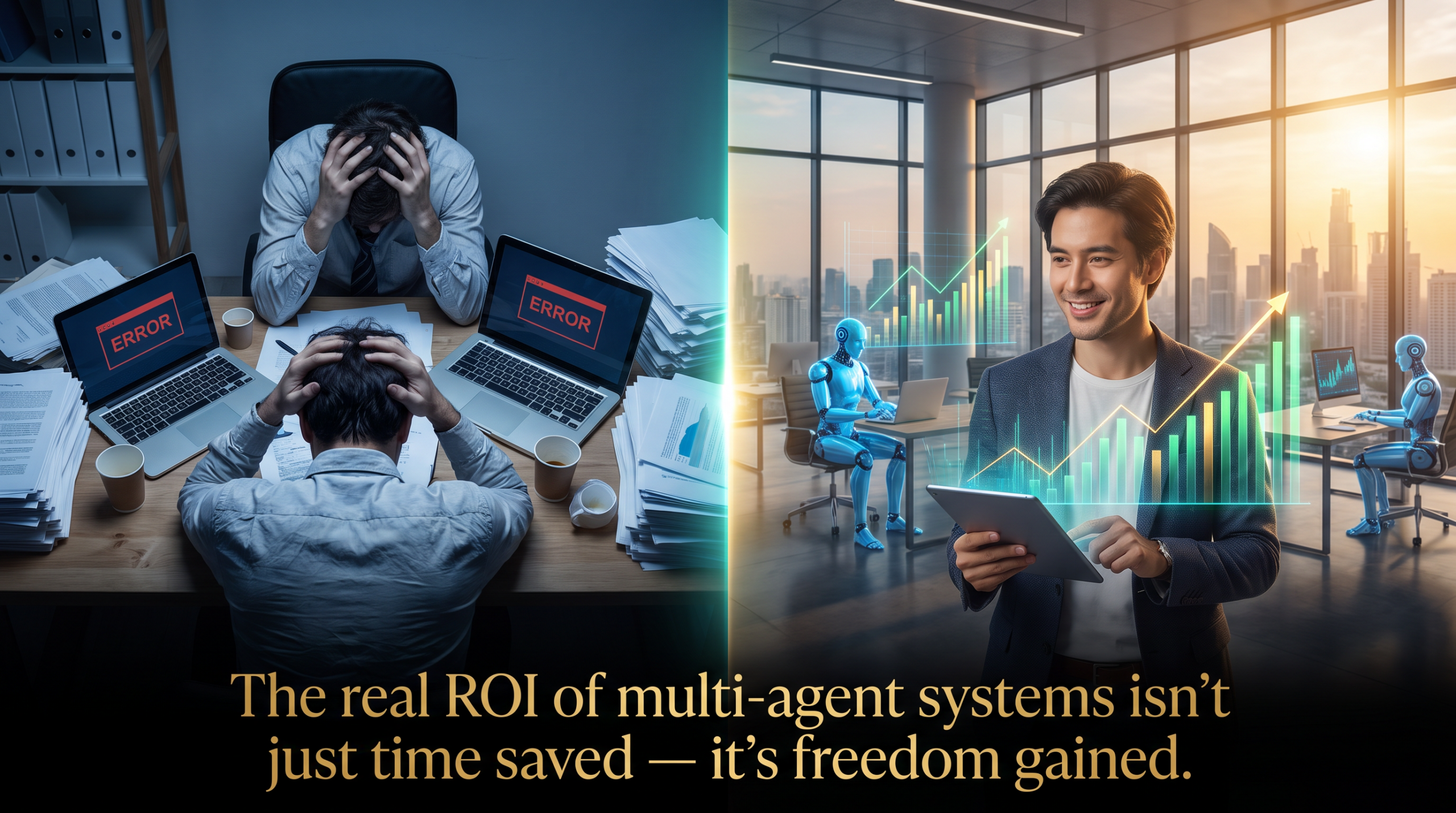
1Enterprise AI Automation 2026: How Google Gemini, xAI Agents & Sensor Robots Scale Big Business explores how the newest wave of enterprise AI is moving beyond experimentation and into real operational scale. In 2026, companies are no longer asking whether AI can help—they are asking how fast it can reduce costs, improve decision-making, and reshape entire workflows across finance, logistics, customer support, manufacturing, retail, healthcare, and professional services. Google’s Gemini Enterprise Agent Platform is positioned as a unified environment to build, govern, and optimize agents across the business stack, while xAI’s Grok models are gaining enterprise traction through agent platforms and cloud integrations.blog+1
The article examines the positive impact of this shift with realistic examples: faster document processing, stronger predictive maintenance, better customer service, more precise supply-chain decisions, and more efficient industrial operations powered by sensor-connected robots and autonomous systems. It also looks at the negative side with equal seriousness: job displacement, skill polarization, governance gaps, hallucination risks, cybersecurity exposure, and the danger of deploying automation faster than teams can adapt. The result is a balanced, strategic overview of where enterprise AI is creating measurable value, where it is still overhyped, and which sectors are most likely to benefit—or struggle—over the next phase of digital transformation.pwc+5
Core Angles Covered
| Topic | What the article covers | Business value |
|---|---|---|
| Google Gemini enterprise agents | Building, scaling, governing, and optimizing agents in one environment blog | Faster deployment, better control, unified AI operations |
| xAI and Grok in enterprise | Agentic tool use, enterprise search, and cloud distribution pathways x+1 | More model choice, competitive experimentation, workflow automation |
| Sensor robots and industrial automation | Predictive, collaborative, and adaptive robotics in real operations esa-automation+1 | Lower downtime, better quality control, higher throughput |
| Labor market effects | AI-driven job transformation, reskilling pressure, and human skill premium pwc+1 | Helps leaders plan workforce transitions responsibly |
| Social and economic impact | Productivity gains versus inequality, displacement, and governance risks cornerstoneondemand+1 | Supports informed, critical decision-making |
Sector Impact
| Sector | Likely gains | Main risks |
|---|---|---|
| Finance | Faster analysis, compliance support, fraud detection | Model risk, regulatory exposure, over-automation |
| Healthcare | Triage support, admin automation, better scheduling | Privacy, safety, liability concerns |
| Manufacturing | Predictive maintenance, robotic inspection, process control | Capital cost, workforce displacement |
| Retail and e-commerce | Smarter demand forecasting, support automation | Weak personalization if poorly trained |
| Logistics | Route optimization, warehouse automation, sensor-based monitoring | System dependence, edge-case failures |
| Professional services | Drafting, research, workflow acceleration | Quality drift, client trust issues |
Why It Matters
This topic matters because enterprise AI is no longer a niche innovation trend—it is becoming a core operating layer for modern business. Reports in 2026 show that AI is increasingly tied to workforce redesign, skills transformation, and productivity growth, but also to major transition costs for workers and organizations that fail to reskill quickly. That tension is what makes the story important: the same tools that can scale companies can also widen gaps if governance, training, and accountability are weak.pwc+3
Enterprise AI Automation 2026 is the definitive look at how Google Gemini, xAI agents, and sensor-driven robots are transforming large-scale business operations. Backed by current data, real enterprise use cases, and a critical assessment of risks and rewards, this piece shows how AI is driving measurable gains in productivity, efficiency, and innovation while also raising urgent questions about jobs, ethics, and long-term social impact.blog+2