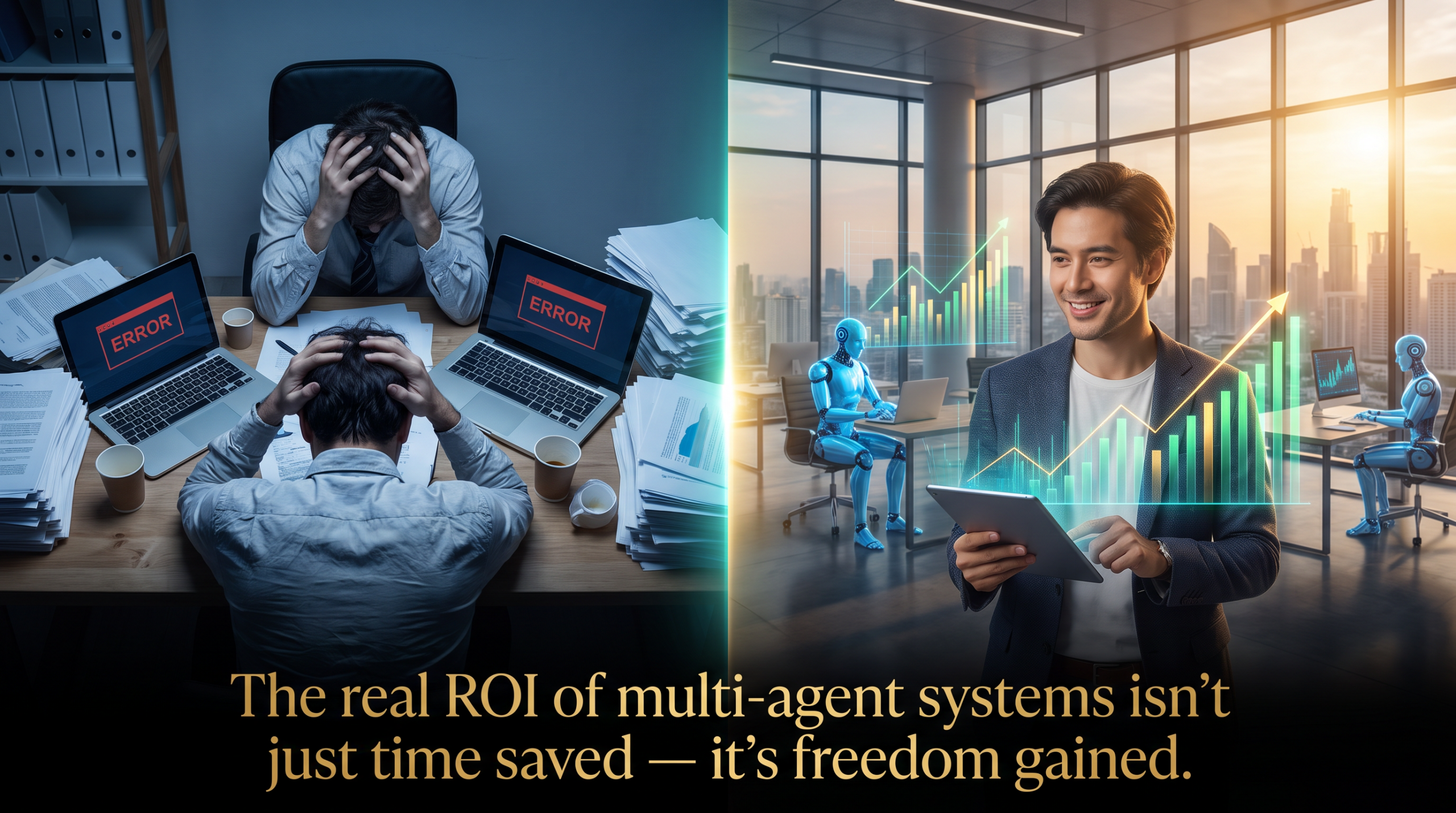
How to Build Scalable AI Agents & Automated Workflows with CrewAI and LangChain in 2026
2Building scalable AI agents in 2026 is no longer about creating a chatbot that answers questions well. It is about designing reliable, multi-step workflows where specialized agents plan, execute, verify, and escalate work across business functions with measurable outcomes. The strongest approach combines CrewAI’s role-based coordination with LangChain’s orchestration and production tooling so organizations can automate more work without losing control.youtubelangchain+1.
Scalable AI agents are best understood as software teams, not single assistants. One agent may research, another may draft, another may validate, and a final one may route the result to a human or system of record, which makes the workflow more resilient than a single prompt chain. This model is particularly useful in enterprises where work is repetitive, multi-step, and dependent on policy, context, or approvals.blog+1youtubeampcome
LangChain is useful when teams need flexible workflow design, observability, and a mature path from prototype to production. CrewAI is especially attractive when business users and developers want clear role separation, collaborative behavior, and faster adoption for operational workflows. Together, they support a practical enterprise pattern: use LangChain for structure and control, and CrewAI for coordination and business logic.langchainyoutube+1
Why It Matters
The business value is real because many enterprise tasks are not one-step problems. They involve research, decision support, cross-system actions, and human review, and that is exactly where agent workflows can outperform conventional automation. Google Cloud’s 2026 AI agent trends report says companies are already using agents to boost productivity, automate complex tasks, improve customer experiences, and strengthen security operations.automationbyexperts+1
There is also a broader social contribution. When organizations automate low-value administrative work, employees can spend more time on judgment, creativity, customer care, and strategic decision-making. In that sense, agent workflows can improve service quality, reduce operational friction, and make smaller teams more productive across sectors such as support, finance, manufacturing, healthcare operations, and internal IT.buildmvpfast+2
How To Build
A scalable workflow should start with a narrow use case, not a broad ambition. The best candidates are repetitive workflows with clear inputs and outputs, such as lead qualification, support triage, document extraction, order processing, or internal knowledge retrieval. Teams should define success metrics before building: accuracy, time saved, human escalation rate, and business impact per task.ampcome+2
A strong architecture usually includes five layers:
- Task planner, which breaks the objective into steps.
- Specialized agents, which each handle a narrow role.
- Tool layer, which connects to APIs, databases, and apps.
- Validation layer, which checks for quality and policy compliance.
- Human-in-the-loop layer, which handles exceptions and sensitive decisions.langchain+1
For practical implementation, LangChain is often the better choice for chains, tool use, retrieval, and production observability, while CrewAI is useful for assembling role-based agent teams that mirror how real departments work. The most scalable systems are not fully autonomous; they are supervised systems with strong checkpoints and clear fail-safe behavior.youtubeblog+2
Positive Outcomes
The upside is significant when the workflow is properly chosen. In customer support, agents can route tickets, summarize history, suggest replies, and reduce average handling time. In sales and marketing, they can enrich leads, draft outreach, update CRM records, and coordinate follow-up, which helps teams work faster with less manual repetition.youtubeblog+2
In operations and back-office work, the gains can be even larger because the tasks are structured and repetitive. Examples include order processing, invoice review, procurement support, compliance document handling, and internal help desk automation. This creates real productivity gains because agents can work around the clock, process larger volumes, and reduce the burden on human teams.blog+1
Risks And Limits
The negative side is equally important. Multi-agent systems can multiply mistakes if one agent’s bad output is trusted by the next agent, so a weak design can create a chain of failures instead of a chain of value. That is why enterprises need strong logging, evaluation, permission boundaries, and fallback rules before moving beyond pilot deployments.arcade+3
There is also the risk of over-automation. Some organizations rush into agent systems expecting immediate financial returns, but the 2026 productivity data shows that many firms still see limited earnings impact even when they adopt GenAI broadly. The lesson is that automation only creates value when the process is well understood, the data is clean, and the output is tied to a measurable business outcome.digitalapplied+1
Sector Scenarios
| Sector | Positive Scenario | Negative Scenario | Real Contribution |
|---|---|---|---|
| Customer Support | Agents summarize cases, route tickets, and draft responses blog+1 | Wrong replies and poor escalation logic damage trust buildmvpfast | Faster service and lower workload per agent blog |
| Sales | Agents enrich leads, draft outreach, and manage CRM updates youtubebuildmvpfast | Over-automation reduces authenticity and conversion quality digitalapplied | Higher throughput and better follow-up discipline youtube |
| Finance | Agents assist with document processing and internal review automationbyexperts+1 | Compliance and audit risks rise if autonomy is too broad digitalapplied | Better back-office speed with controlled use cases automationbyexperts |
| Manufacturing | Agents help with order flow, reporting, and request handling blog | Integration issues can break process continuity arcade | Reduced admin overhead and faster coordination blog |
| Healthcare Ops | Agents support intake, summarization, and routing blog+1 | Sensitive decisions require strict governance digitalapplied | Better administrative efficiency, not clinical replacement blog |
Comparison Table
| Dimension | CrewAI | LangChain |
|---|---|---|
| Core strength | Role-based collaboration and multi-agent teamwork youtube+1 | Flexible orchestration and production readiness langchain |
| Best for | Business workflows with clear agent roles youtube | Custom engineering-heavy agent systems langchain |
| Ease of adoption | Often easier for workflow thinking youtube | Strong for technical teams building complex systems langchain |
| Production control | Good for structured agent groups crewai | Strong observability and production tooling langchain |
| Main weakness | Can be unnecessary for simple tasks ampcome | Can become complex without disciplined design digitalapplied |
Implementation Blueprint
A sensible rollout strategy is simple:
- Choose one high-value workflow with clear ownership.
- Map the steps and identify which ones need automation.
- Build a small pilot with strict evaluation metrics.
- Add human review for sensitive or low-confidence steps.
- Expand only after reliability is proven in production.ampcome+1
This approach reduces risk and helps teams avoid the common trap of building impressive demos that never become useful systems. The best enterprise results come from operational discipline, not hype.buildmvpfast+2
Spreadsheet Layout
Workflow Scorecard
| Workflow | Business Value | Repetition | Automation Readiness | Risk | Recommended Stack |
|---|---|---|---|---|---|
| Support triage | High | High | High | Medium | CrewAI + LangChain |
| Lead qualification | High | High | High | Medium | CrewAI |
| Internal knowledge search | Medium | High | High | Low | LangChain |
| Compliance review | High | Medium | Medium | High | LangChain with human review |
Deployment Checklist
| Category | Questions To Answer |
|---|---|
| Data | Is the data clean, current, and authorized? |
| Control | Can the workflow stop safely when confidence is low? |
| Measurement | Are savings and error rates measurable? |
| People | Who reviews exceptions and owns the workflow? |
| Scale | What systems must the agent connect to next? |
Risk Register
| Risk | Impact | Mitigation |
|---|---|---|
| Hallucinated output | High | Validation and retrieval grounding |
| Workflow drift | Medium | Monitoring and retraining |
| Vendor dependence | Medium | Modular architecture |
| Compliance failure | High | Permission controls and human review |
Final View
CrewAI and LangChain are most powerful when used to automate real work, not just to demonstrate AI capability. Their value lies in helping organizations scale execution, reduce repetitive labor, and improve consistency while keeping humans in control of the most important decisions.youtubelangchain+2
The strongest business and social impact will come from careful adoption: start small, measure honestly, govern tightly, and expand only when the workflow proves itself in the real world.