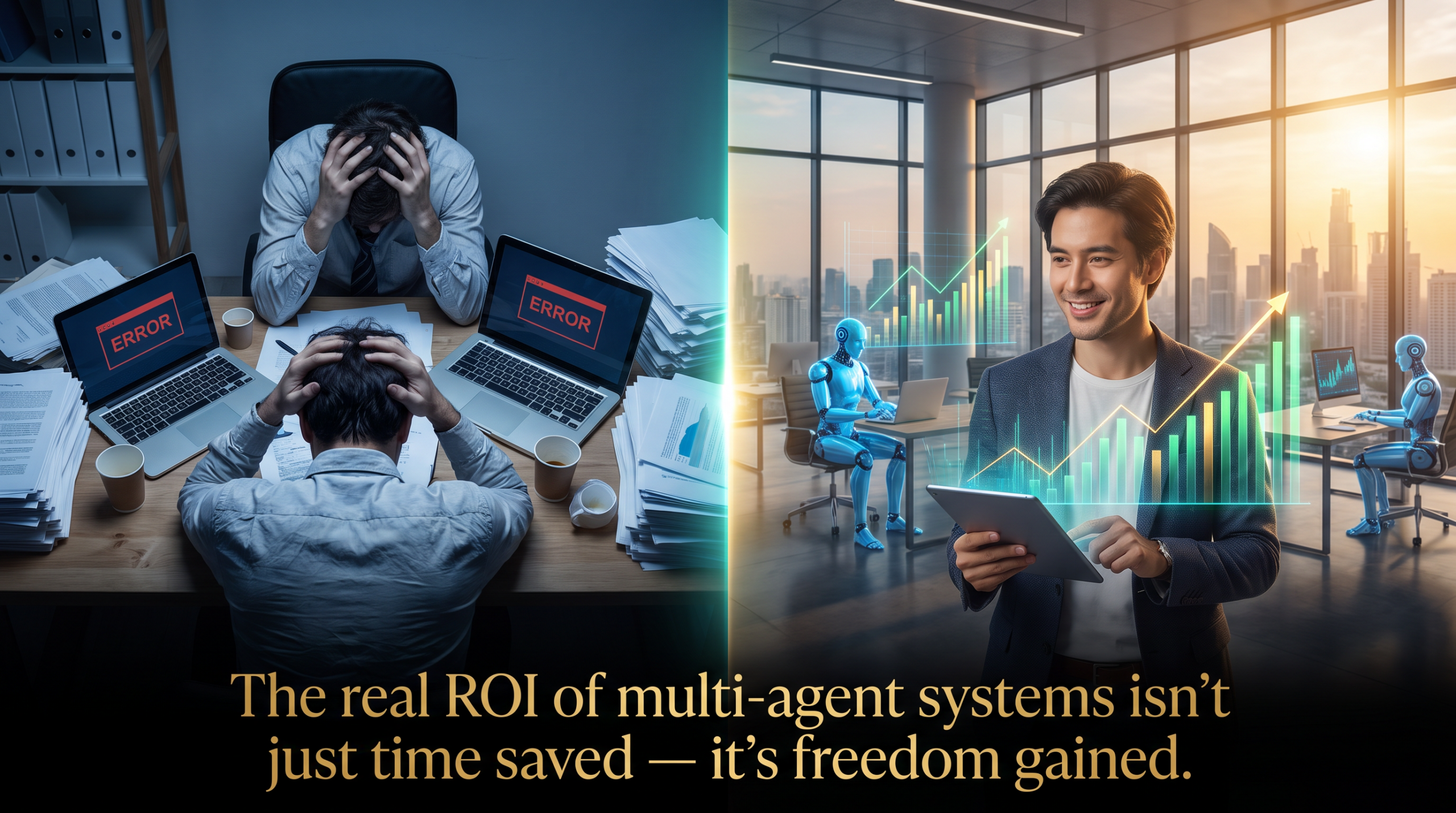
AI Agents, Cameras & Sensors: Future Opportunities to Scale Digital Businesses with Google & xAI
3Google’s Gemini Enterprise Agent Platform is central to this shift, combining model building, agent orchestration, governance, security, and DevOps in one enterprise environment. At the same time, xAI’s Grok ecosystem is gaining attention through enterprise integrations and agent platforms, showing that the market is moving toward more competitive, multi-model workflows rather than relying on a single AI provider. This creates new opportunities for startups, SaaS companies, and large enterprises to automate customer support, internal knowledge work, code migration, and high-volume operational tasks at scale.cloud.google+4youtube
The article also takes a critical look at the risks. Deloitte’s 2026 enterprise AI research shows that while worker access to AI rose sharply, only a minority of organizations are truly reimagining their businesses, and data issues remain a major barrier to scale. PwC’s 2026 AI Jobs Barometer adds another important layer: AI is increasing demand for judgment, creativity, and leadership while creating a more divided labor market for workers with and without AI-ready skills. In other words, AI can accelerate growth, but without governance, training, and ethical deployment, it can also widen inequality, create fragile dependencies, and automate value away from people instead of for them.pwc+4
What The Article Covers
| Topic | Focus | Practical value |
|---|---|---|
| AI agents in business | Autonomous workflows, task execution, and enterprise orchestration blog+1 | Faster operations and less manual work |
| Cameras and sensors | Visual recognition, monitoring, predictive systems, and robotics esa-automation | Better quality control and real-time insight |
| Google ecosystem | Gemini Enterprise, partner-built agents, and full-stack governance blog+1 | Scalable enterprise adoption |
| xAI ecosystem | Grok-based reasoning, tool use, and platform expansion x+1 | More competition and model diversity |
| Workforce impact | Skills shifts, productivity gains, and labor-market pressure pwc+1 | Better planning for hiring and reskilling |
Sector Impact Table
| Sector | Positive contribution | Main concern |
|---|---|---|
| E-commerce | Smarter recommendations, fraud detection, faster support | Poor personalization if data is weak |
| Logistics | Route optimization, warehouse visibility, sensor monitoring | Integration complexity |
| Manufacturing | Predictive maintenance, robotic inspection, fewer downtime events | Capital cost and job displacement |
| Healthcare | Admin automation, imaging support, triage assistance | Safety, privacy, and liability |
| Finance | Faster analysis, compliance support, risk monitoring | Model risk and regulatory exposure |
| Media and marketing | Content workflows, personalization, campaign automation | Brand consistency and trust |
Key Business Scenarios
- Best-case scenario: AI agents and sensor systems become a true productivity layer, helping businesses scale faster while workers move into higher-value roles.youtubepwc
- Mixed scenario: Companies gain efficiency, but only those with strong data foundations and governance see full ROI.deloitte+1
- Risk-heavy scenario: Automation is deployed too quickly, creating job pressure, weak accountability, and security vulnerabilities.reports.weforum+1
- Innovation scenario: Startups build niche agent products on top of Google and xAI ecosystems, creating new markets in automation, analytics, and robotics.cloud.google+1
Why It Matters
This topic matters because enterprise AI is no longer just about tools—it is becoming a business operating model. Google’s own 2026 messaging shows the industry shifting from isolated assistants to governed, scalable agent systems, while broader labor research suggests the winners will be organizations that combine AI investment with human judgment and workforce adaptation. The social value is real: improved efficiency, stronger services, and faster innovation. But the long-term benefit depends on whether companies use AI to augment people and improve systems, or simply to cut costs without building trust, skills, and resilience.blog+4
AI Agents, Cameras & Sensors: Future Opportunities to Scale Digital Businesses with Google & xAI is a forward-looking analysis of how enterprise AI, computer vision, and sensor intelligence are transforming modern business. With updated examples, current market signals, and a balanced look at both opportunity and risk, it shows how Google and xAI are shaping the future of scalable, data-driven digital operations.