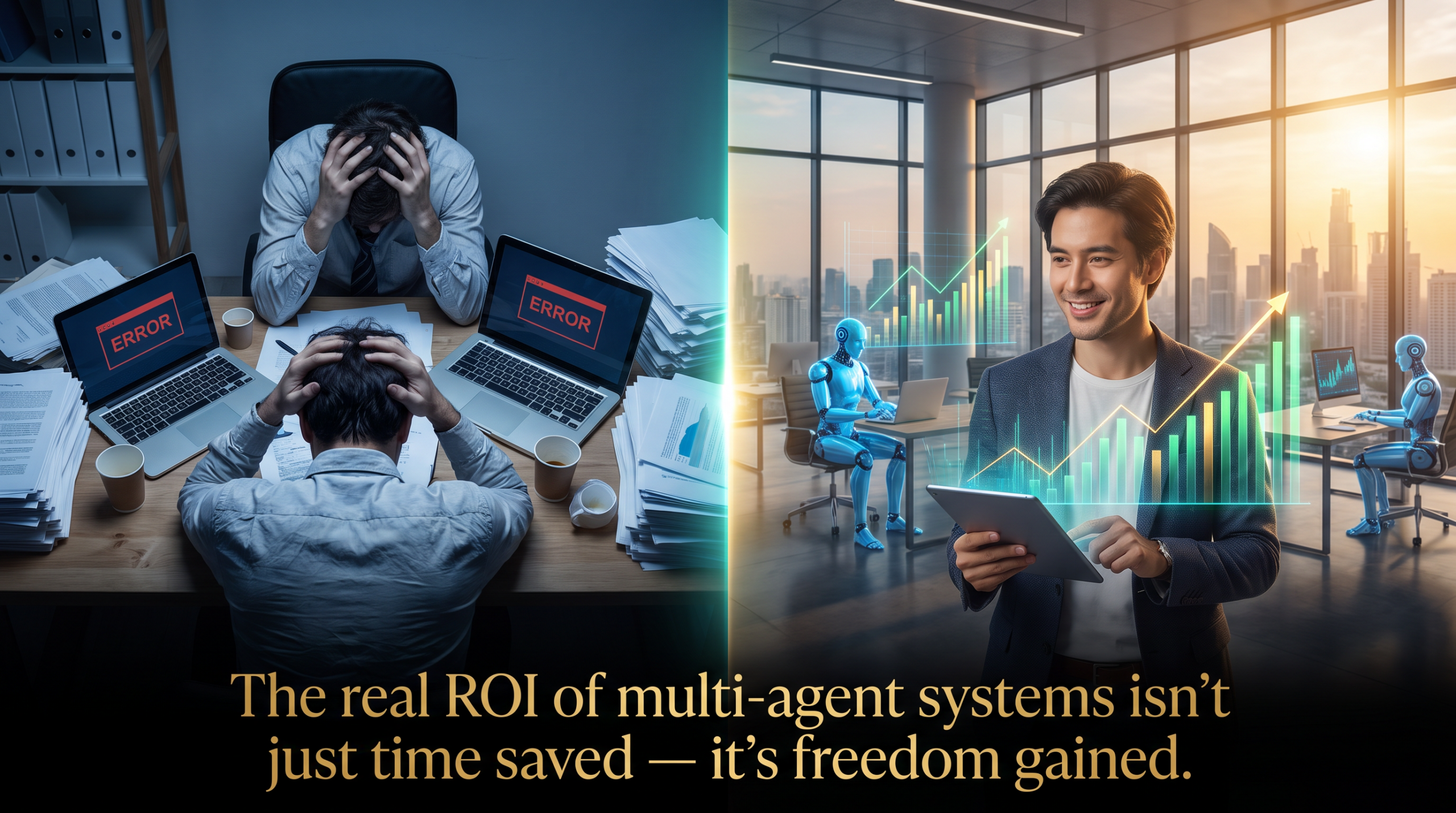
Scaling Old & New Businesses with AI Robots & Agents: Google Gemini Enterprise & Startup Strategies 2026
1Google’s Gemini Enterprise Agent Platform is one of the clearest examples of this shift, offering a secure environment to build, scale, govern, and optimize AI agents across the enterprise stack. Google and its partners are positioning the platform as a full transformation layer, not just a chatbot, with real use cases in customer service, supply chain operations, compliance, product innovation, and content generation. For startups, this opens a practical path to build agentic products faster, integrate with enterprise systems, and compete in markets where automation and speed are increasingly decisive.blog+5
The article also presents the critical downside. Deloitte’s 2026 enterprise AI research shows that while AI access in the workplace is expanding quickly, only a minority of organizations are truly redesigning their business models, and data-related issues remain a major obstacle. PwC’s 2026 AI Jobs Barometer adds that AI is increasing demand for judgment, creativity, and leadership, but it is also intensifying pressure on workers without AI-ready skills, creating a more divided labor market. In practical terms, this means AI can scale businesses efficiently, but without governance, training, and clear accountability, it can also amplify inequality, weaken trust, and automate value away from people rather than for them.deloitte+4
Business Value Table
| Area | Positive impact | Business risk |
|---|---|---|
| Legacy companies | Faster modernization, process automation, lower operating costs pwc+1 | Resistance to change, integration complexity |
| Startups | Rapid product development, lower build time, scalable agent workflows blog+1 | Dependence on platforms, weak differentiation |
| Customer support | 24/7 service, faster response, better triage cloud.google+1 | Hallucinations, poor escalation handling |
| Supply chain | Inventory visibility, forecasting, operational optimization pwc+1 | Data quality and system integration issues |
| Marketing and sales | Personalized campaigns, content generation, better targeting blog+1 | Brand inconsistency, compliance concerns |
| Robotics and sensors | Predictive maintenance, inspection, real-time monitoring cloud.google+1 | Cost, safety, and deployment complexity |
Sector Impact Table
| Sector | Real contribution | Negative scenario |
|---|---|---|
| Manufacturing | Less downtime, better quality control, smarter production | Job displacement and heavy upfront investment |
| Healthcare | Better admin workflows, faster access to information | Privacy, safety, and liability issues |
| Finance | Faster analysis and compliance support | Model risk and over-automation |
| Retail | Smarter merchandising and inventory decisions | Weak data can create poor recommendations |
| Logistics | Route optimization and warehouse efficiency | System fragility if automation fails |
| Media and digital business | Faster content production and workflow scaling | Content quality loss and trust issues |
Strategic Scenarios
- High-growth scenario: Companies combine Gemini-style agents with robotics and sensor systems to create leaner, faster, and more adaptive operations.cloud.google+1
- Startup acceleration scenario: Small teams use AI agents to compete with larger firms by automating support, operations, and analytics at lower cost.blog+1
- Governance-first scenario: Enterprises succeed by pairing AI with strong security, human review, and data discipline.deloitte+1
- Risk scenario: Organizations chase automation without redesigning processes, leading to weak ROI, employee pushback, and fragmented execution.reports.weforum+1
Social Value
The broader social value of this shift is significant. AI can help old businesses stay competitive, help new businesses scale faster, and improve the quality and speed of services people rely on every day. It can also support productivity growth, better resource allocation, and more intelligent public- and private-sector decision-making. But the same technologies can deepen inequality if workers are not reskilled and if companies use automation only as a cost-cutting tool instead of a value-creation tool.